Loading

Loading

Interloop Consulting’s DEI tool has been created with the aim of assessing an organization’s Diversity, Inclusion, and Equitable culture.
Using this tool, the organization can focus on the key areas required to create a Diverse and Inclusive culture in the workplace.
It will provide organizations with an empirically validated framework to measure and drive employee diversity, equity and inclusion across their operation and help companies unlock the key inclusion opportunities to achieve their business objectives
Below is the comprehensive list of the diversity dimensions that we have covered to measure the Diversity Index –






Creating a secure environment where employees feel safe to take risks, ask other team members for help, and more easily discuss difficult problems and issues.
Team members should feel free to share their thoughts and opinions. Everyone works in a collaborative manners and feel they are heard and all ideas are on the table
Team members should feel free to share their thoughts and opinions. Everyone works in a collaborative manners and feel they are heard and all ideas are on the table
This encourages discussion, open communication and exploration of new paths. It ensures that the organization, the manager, and the employee clearly demonstrate a commitment to create an inclusive culture.
It is the feeling of security and support when there is a sense of acceptance and identity for a member of a certain group. It gives us a sense of purpose and meaning.
This ensures employees are provided with adequate assistance in learning and growth opportunities. It is necessary to stay motivated in the face of the challenges and setbacks of inclusion work.



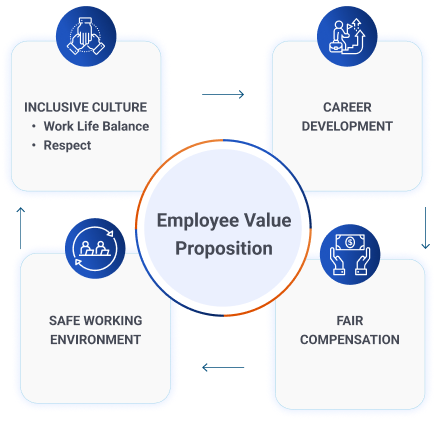
This dimension refers to an employee compensation, division of labor and review system that is fair, objective and free from any unconscious bias.
Organization need to build a fair promotion and advancement practices that are acceptable at all levels, and demonstrated and advocated by leaders at all levels.
This is the dimension where employees are acknowledged for their performance. The company has a culture where there is appropriate acknowledgment and appreciation of employees’ efforts in a fair and timely manner.


Diversity, Equity
& Inclusion
Teams with gender-diversity make better decisions 73 percent of the time, compared to 58 percent of the time for all-male team
Teams are 158% more likely to understand target customers when they have at least one member who represents their target's gender, race, age, sexual orientation, or culture



Understanding the current gaps in the DEI goals and objectives
Identify the critical areas that require implementation of DEI goals
Understand employee expectations from the collated survey results
Outline the major improvements and focus areas in DEI goals from the previous financial year
Develop customized score cards highlighting insights about DEI from all levels and generating customized stakeholder scorecards
Sustain the impact created with DEI implementation across the organization along with outlining a strategic futuristic course of action
Using Simpson Diversity Index methodology and covering 29 total dimensions of Diversity, Equity, and Inclusion
Metrics defined under various HR functions are mapped with DEI survey questions
HR Score Card is generated with DEI pillar scores mapped with each HR function
Talent Acquisition, Performance Management, Compensation & Benefits, Employee Engagement, Learning & Development, Compliance, HR Business Partner
Diagnostic approach is used to identify areas of improvement
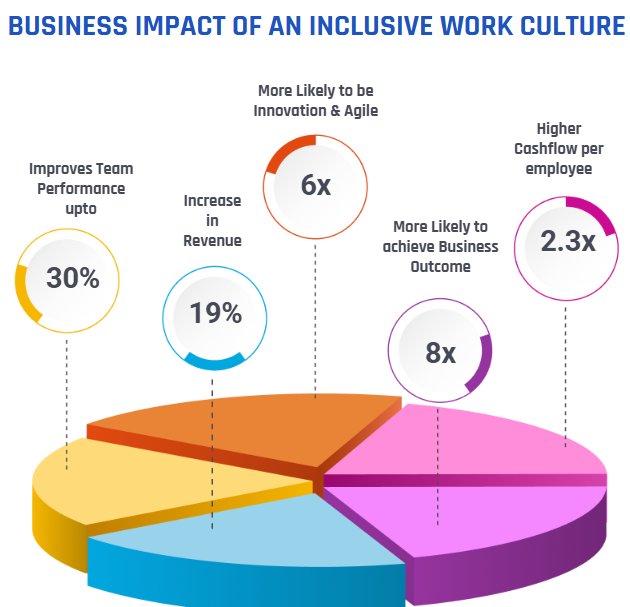
Interloop Consulting has identified key metrics which are majorly influenced by how effectively the DEI strategy is implemented across the organization.
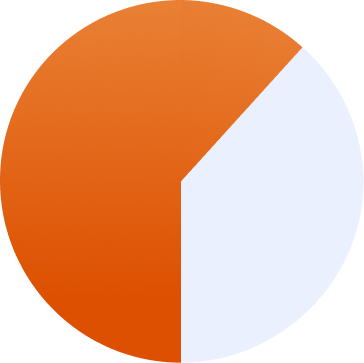

Engaged
employees deliver
57%
more
effort than
uncommitted
ones
Businesses with diverse teams tend to see greater engagement, innovation and productivity. Source : ADP Article

Diversity, Inclusion & Equity Score Card
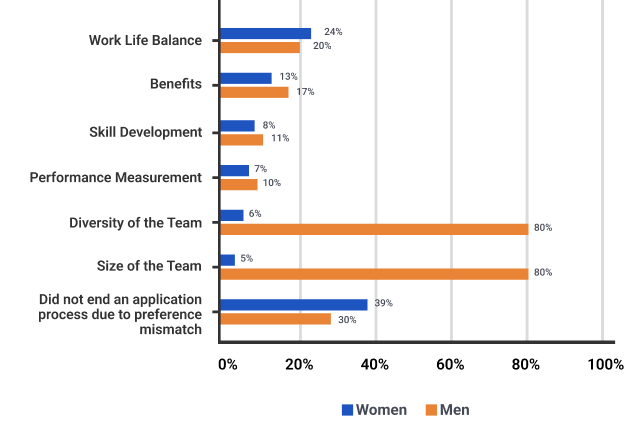
GARTNER STUDY : Women are more likely than men to discontinue an application process in Recruitment for only one reason: Work-life balance

81%
Employees who feel they work in an inclusive culture, 81% said they are happy in their jobs

46% - 58%
Employees who feel they work in an inclusive culture, 81% said they are happy in their jobs

26%
Employees who feel they work in an inclusive culture, 81% said they are happy in their jobs
Fair & Healthy Management
Communication Strategy
Professional Growth
Appreciative Leadership
Employee Satisfaction
"Inclusion is a key factor in boosting employee satisfaction & performance" - SHRM Research
Source: ICMI article
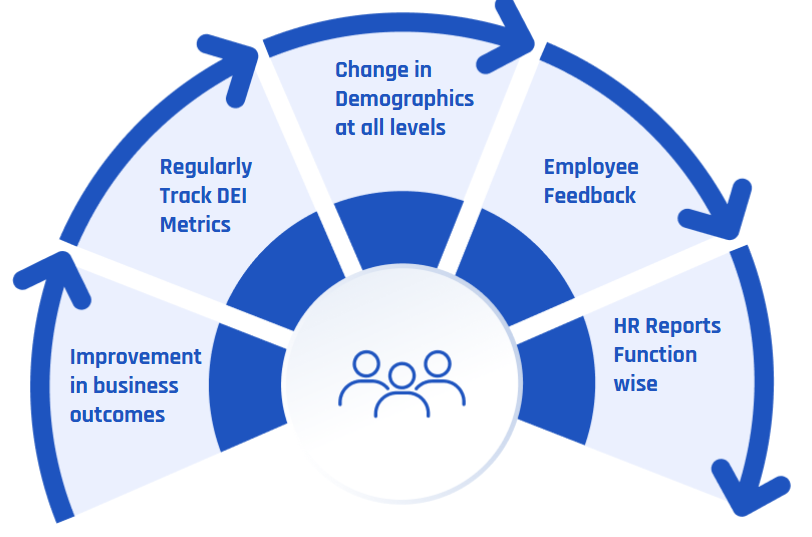
DEI business-driven metrics are an indicator of the state of DEI efforts at your organization. It helps your organization assess DEI outcomes and progress.

Contact us today to learn more about how we can help you achieve your business goals through strategic consulting and digital transformation.